
Last December, the Prime Minister announced that Ottawa would be the first city to receive federal help through the new Build Canada Homes initiative. Late Thursday night ahead of the long weekend, we learned the details of the proposed deal that Mayor Sutcliffe has struck with the feds. There is less than a week before a joint committee considers whether to approve it or not, but several concerns are already evident.
At a high level, the agreement sees far too few affordable units, and especially deeply affordable units, built for far too large a City contribution.
The agreement is structured with two main parts.
- A $150-million federal contribution to building 1,000 units of supportive and affordable housing that have been identified for funding by the City.
- A partnership in which Build Canada Homes will build 2,000 units of housing on federal lands, with 600-800 of those units being defined as broadly affordable, 200 of which would be deeply affordable. This second component depends on a $200-$250 million package of fee and tax waivers on the part of the City.
City-proposed affordable and supportive housing
To build the 1,000 units of City-proposed supportive and affordable housing, the federal contribution would be to provide $150 million in funding and financing. It is not clear from the report how much would be financing and how much a straight capital contribution. The units would be built by Ottawa Community Housing (OCH) or other not-for-profit providers. It’s not clear exactly which projects those would be.
There is a list of projects with high-level descriptions in the report, though. I suspect councillors and the public could probably figure those out. For example, a 158-unit supportive housing development built by a partnership led by OCH in Kitchissippi is almost certainly what had originally been conceived of as the Matthew Perry House.
The big problem immediately evident to housing advocates is that those 1,000 units would require operating dollars. There is no indication those are available from the Province whose job it is to provide those. Housing advocates are leery of committing to build that housing without knowing if the operating dollars will flow.
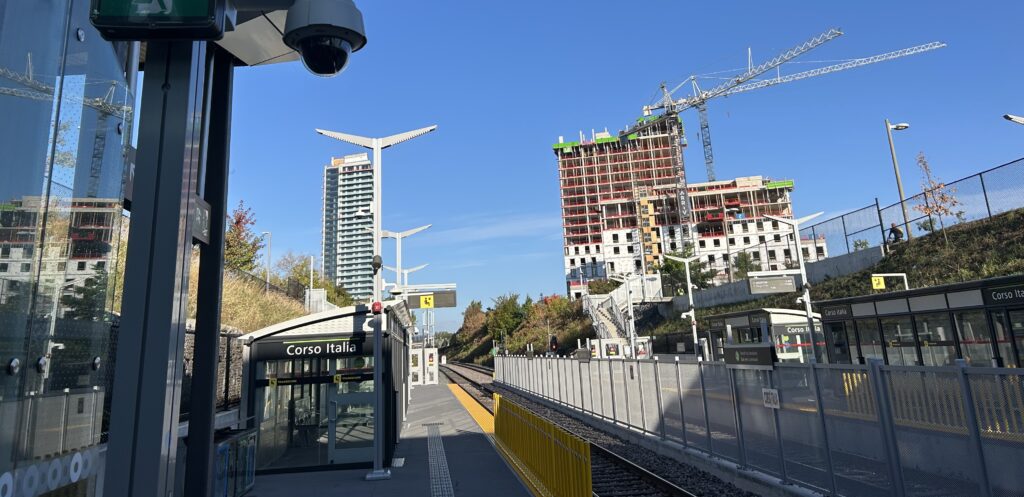
Affordable units on federal land
In a second part of the deal, Build Canada Homes will construct 2000 units of new mixed-income units on federal lands.
Of those, 1200-1400 would be made available at the market price. The other 600-800 would be rented at an “affordable” price. Half of those would meet the federal definition of affordable and half would meet the City’s. “Up to” 200 of the total units in these projects would be “deeply affordable” according to the federal government’s definition and intended for low and very low income households.
The difference between federal and City definitions of “affordable” is important. In the case of the 3- and 4-bedroom units that will be “prioritized” in these developments, the federal definition would allow units costing up to $400-$1000 a month more to be considered affordable for moderate income households. It is unclear how many of these multi-bedroom units would be deeply affordable.
The whole package for these units is problematic. Those developments on federal lands would see City taxpayers on the hook for around $200-$250 million in costs, and committed to fast-tracking approvals. Those terms are as follows:
- waive parkland fees and community benefits
- drop property taxes for either federally- or City-defined affordable units
- waive millions in application fees
- bypass normal consultation and applications
- remove the requirement to place housing wait list tenants in affordable units.
At $200 million or more, this is a very high taxpayer bill to get 300-400 units that are affordable according to the City’s definition, and just 200 deeply affordable units.
Council should send the Mayor back to the table for a better deal.
We need to ensure either no loss of development charges on market-priced units or that there is an offsetting payment to the city. If a blanket development charge exemption is offered, that should be only where the housing is owned by a not-for-profit provider. Eliminating development charges as proposed will result in a $50-million shortfall at the City. That’s money that’s intended to build infrastructure that we need to support growth. Without it, we’ll need to delay projects or borrow more to build them.
At the very least, only those units that meet the City’s strict definition of affordability should get property tax relief.
There also needs to be stricter guarantees that there will be appropriate park and public spaces on large sites. And, before we sign, Council needs to be very clear about the level of public consultation that will happen during the rush to approvals. Where deeply affordable units are offered, those need to go first to people on the waitlist for affordable housing.
The current deal reflects a roughly 50/50 partnership that ignores the disparity in resources available to the federal and municipal governments. Few doubt the need for significant public help to get shovels in the ground on affordable housing. But municipal governments are already struggling with budget holes and asking for matching contributions is untenable.
Finally, this $200-$245 million relief package is being debated before we pass a long-term financial plan for the City. I would not argue against making a significant commitment today: we need the housing and there’s a deal on the table now. But the impact and uncertainty of not having that long-term plan when making decisions like this grows every day.